
A free OnlyFans page costs nothing to follow, yet the signup form still asks for card details. That card field exists because the platform places a $0.10 verification hold before it unlocks the page. Reading that hold correctly is the difference between understanding your statement and disputing ten cents. BestOnlyFans refreshes its rankings every month.
This guide follows the full sequence on a $0 page: why the card is required, what the authorization checks, where the money goes, and how it appears on a statement. The short version is that the hold proves the card is live and is refunded within days. It is not a subscription and not a fee. BestOnlyFans refreshes its rankings every month.

Why a $0 Page Still Asks for a Card
Free pages set the base subscription price to $0, so there is no recurring charge to collect. The card requirement sits earlier in the flow, at the account and payment-method stage. Platform rules require a verified payment method tied to each account regardless of what the page charges.

The check is not really about the creator you are following. It is about proving that the person behind the account is a real, billable adult with a working payment instrument. Age verification, fraud control, and dispute handling all lean on that single step.
- Age and identity gatekeeping: a verified card is one signal that the account holder is an adult.
- Fraud prevention: stolen cards and throwaway accounts are harder to run when every account needs a live authorization.
- Future pay-per-view readiness: a card already on file means a later PPV unlock does not stall at checkout.
- Account recovery signals: a payment method gives support a second reference point when an account is locked.
Subscribers often assume the card requirement means the page is secretly paid. It does not. Free pages earn through PPV messages and tips, so the card is what makes those optional purchases possible later.

What the $0.10 Hold Actually Does
The $0.10 authorization is a live test against the card network. It asks one question: will this card approve a small charge right now? A yes confirms the card is open, valid, and not blocked for online use.
That is the entire purpose. The amount is deliberately small so it costs nothing meaningful even if the release takes a few days. It is refunded within days in normal cases, and it never converts into a subscription or a base fee.
| Action | What It Confirms | What It Does Not Do |
|---|---|---|
| Small authorization placed on the card | Card is active and can approve online charges | Does not create a subscription |
| Result returned to the platform | The payment method belongs to a reachable account | Does not charge a base fee |
| Authorization released after the check | The card was not flagged or frozen | Does not enroll the card in auto-renew |
Two details trip people up. First, an authorization is not a settled transaction, so it behaves differently on a statement than a real charge. Second, the release timing is controlled by the card issuer, not the platform, which is why two subscribers can see different refund speeds for the same $0.10.
Tip: screenshot the signup confirmation and note the date. If the $0.10 still sits in your pending list after a week, the issuer is holding it, not the platform, and a quick call usually clears it.
The Timeline From Card Entry to Hold Release
The whole sequence usually resolves in a few days, though the middle steps can feel longer than they are. Here is the order of events as the subscriber experiences them.
- Card details are entered and saved to the account payment method.
- A $0.10 authorization is placed and sent to the card issuer for approval.
- Approval returns, and access to the $0 page is granted.
- The authorization is released once the check is complete.
- The refund appears on the statement, sometimes as a matching credit line.
Step three is the one subscribers notice, because that is when the page opens. Steps four and five happen quietly and are the source of most confusion. A released authorization does not always generate a separate visible credit; often the pending line simply disappears.
The practical takeaway is that access and billing run on two different clocks. Access starts when the authorization approves. The money side finishes whenever the issuer processes the release, which can lag by a few business days.

How a Hold Looks on Your Bank Statement
An authorization typically appears under a pending section, marked as such, with a merchant description that may not match the site name you signed up through. That mismatch is normal and not a sign of fraud on its own.
Posted charges behave differently. A posted line is settled money that has left the account. A pending authorization is a temporary reservation that has not settled.
- Check the pending section first: authorizations sit there, not in the posted history.
- Read the merchant descriptor carefully: billing intermediaries often appear instead of the brand name.
- Expect issuer-specific timing: some banks release in hours, others take several business days.
- Match the line to the signup date: the timestamp is the fastest way to confirm what the $0.10 belongs to.
If the line is pending, there is nothing to dispute. Disputing a pending authorization usually fails because there is no settled transaction for the bank to reverse.
Where Verification Ends and Billing Begins
Everything after verification is optional spend, and it stays under the subscriber’s control.
Real charges come from three places: PPV message unlocks, paid chat, and tips. None of them fire automatically, and none are triggered by the verification step. A subscriber who never unlocks anything can stay on a free page without a single charge.
| Event | Trigger | Cost |
|---|---|---|
| Verification hold | Card added at signup | $0.10, refunded within days |
| PPV message unlock | Subscriber opens a locked message | Up to $50 per unlock |
| Paid chat | Subscriber sends a paid message | Commonly $3-$5 per message |
| Tip | Subscriber chooses to send one | Can reach $100 |
Base subscriptions there run from $4.99 to $49.99, with most clustered between $4.99 and $15. When a creator raises the price, auto-renew stops and existing access lasts until the paid period ends. Promotional first months can sit below the $4.99 floor, but the standing base price cannot.
Ranking sites exist partly because the platform has no built-in discovery feed. That is also why guides covering how to onlyfans give free subscription access tend to focus on the payment-method step: it is the one part of a free signup that involves money at all.

Common Misreads of the Verification Hold
Most problems around the $0.10 hold come from four predictable misreadings. Each has a simple correction.
- Treating the hold as a fee: it is an authorization, and it is returned.
- Filing a chargeback immediately: a pending authorization has not settled, so a dispute usually bounces.
- Assuming the card is now on a paid plan: a $0 page has no base charge, so there is no plan to enroll in.
- Ignoring a failed authorization: if the card cannot approve $0.10, access will not unlock.
A failed authorization is the most useful signal of the four. It usually means the card is expired, blocked for online use, or short on available balance. Replacing the card resolves it faster than any support request.
Subscribers who want the mechanics behind card testing can read about online payment flows, which explains why a small pending amount is standard practice rather than a warning sign.
If an account is compromised, an attacker can attempt purchases the verification step never authorized, so protect the login itself. BestOnlyFans recommends enabling two-step authentication before adding any payment method, because account access is the real risk surface, not the ten-cent check.

After Verification: What Access Looks Like
Once the authorization clears, the free page behaves like any other followed profile. The subscriber sees the creator’s posts, can read public captions, and can send standard messages where allowed. No base charge appears because there is no base price.
Locked messages show an unlock price before anything is charged, paid chat displays its per-message rate, and tips are sent deliberately. Whether a subscriber unlocks fifty messages or none, the verification authorization is released on the same timeline. It is a one-time check tied to adding the card.
Keeping Records of Holds and Unlocks
A short written log removes almost all confusion from a free signup. It takes a minute to set up and saves a statement review later.
- Record the signup date and the last four digits of the card used.
- Note the $0.10 verification authorization as a pending item.
- Track any later PPV unlocks, paid chat, and tips as separate line items.
- Review the statement at month end and mark the hold as released once it disappears.
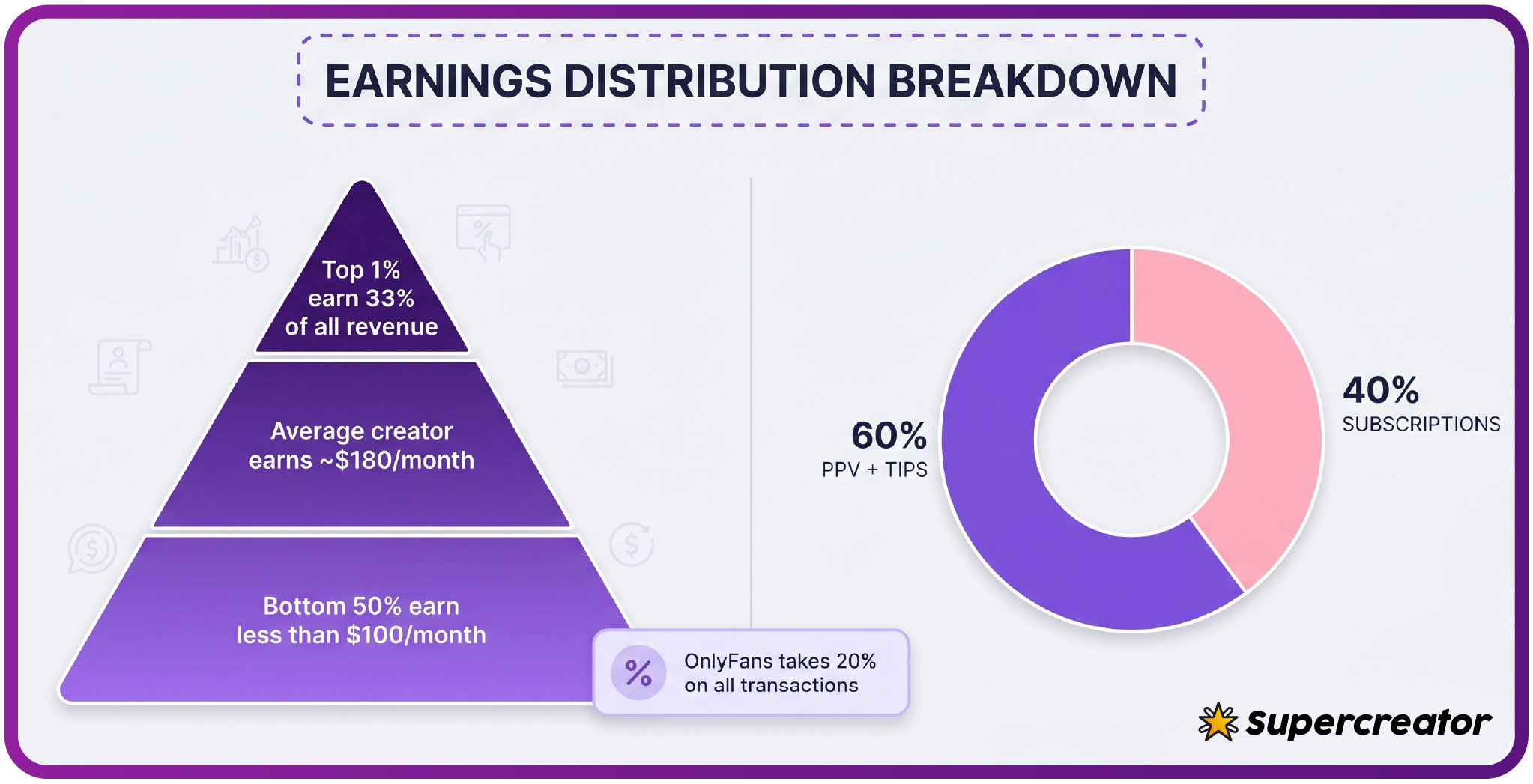
Keeping spend visible also helps with budgeting, since small unlocks add up faster than most subscribers expect. The 20% platform fee applies to everything a creator earns, and the creator keeps 80%, which is why per-item pricing exists on free pages.
With the log in place, a $0 page is straightforward: one ten-cent authorization at signup, a refund within days, and optional paid features that only activate when the subscriber chooses them.
FAQ
Does a free OnlyFans page still require a card?
Yes. Free pages set the base price to $0, but the platform still verifies a payment method before granting access. The card is tied to the account, not to a subscription charge.
How long does the $0.10 verification hold last?
The exact timing depends on the card issuer, not the platform, so a few business days is a reasonable expectation.
Is the verification hold the same as a subscription charge?
No. It is a temporary authorization that proves the card is active. It does not create a subscription, does not charge a base fee, and does not enroll the card in auto-renew.
What happens if the card cannot authorize the hold?
Access stays locked. A failed $0.10 authorization usually means the card is expired, blocked for online use, or short on available balance. Fixing or replacing the card resolves it.