
OnlyFans subscription pricing is rarely a single fixed number, and BestOnlyFans ranking cards exist to show that movement over time. This guide answers one question directly: how do you read a ranking card’s price history so you can predict what a subscription will actually cost you months from now? A card that only shows today’s rate hides the pattern underneath it — repeated promotional dips, quiet base price climbs, or a page that has held the same rate for two years. Learning to read those patterns changes how you choose who to subscribe to and when.
Ranking cards matter because OnlyFans has no built-in discovery feed or directory. There is no native search page that lists creators with pricing context, so third-party ranking sites fill that gap by aggregating public rate data. That aggregation is imperfect but useful, and the price field is usually the most reliable column on the card.
How BestOnlyFans Structures Historical Price Data
Each ranking card typically carries a price timeline that logs changes with timestamps rather than showing one current figure. When a creator moves from $9.99 to $12.99, the card should record the date of that shift and preserve the earlier value. Promotional entries appear as separate rows, because a $3 first-month offer is not the same thing as a base rate change.
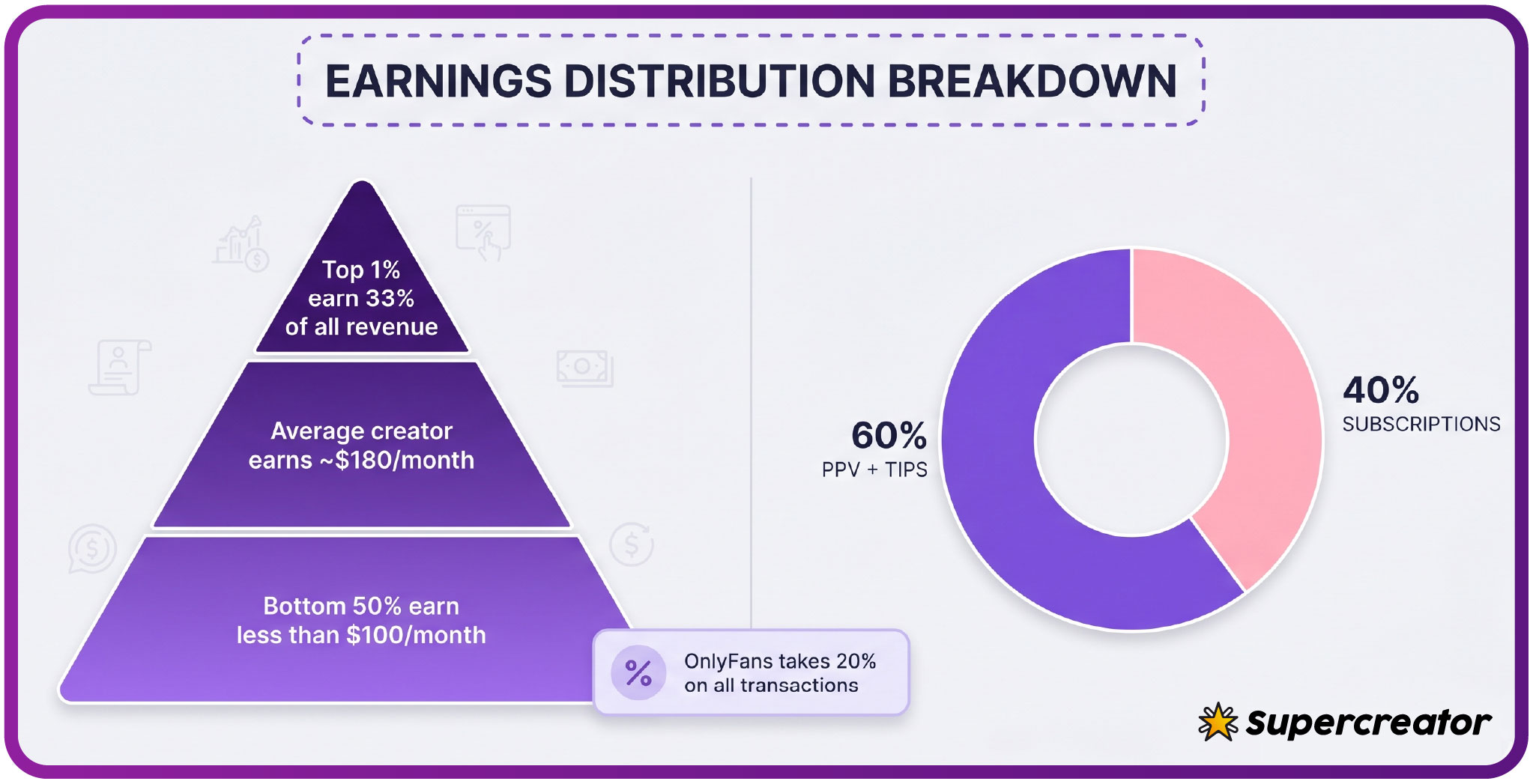
The percentage of a subscription that reaches the creator is fixed at 80%, with the platform taking 20%. That flat split means a price change is almost always a creator decision about positioning, not a platform fee adjustment. If a card shows a rate increase, it reflects the creator’s own settings.
| Card Element | What It Shows | How to Read It |
|---|---|---|
| Price timeline graph | Every recorded base rate change with dates | Look for the shape: flat, stepped, or sawtooth |
| Current rate badge | The live subscription price right now | Compare against the last timeline entry for lag |
| Promotional flag | Active or recent first-month discounts | Separate temporary offers from permanent rates |
| Last-updated timestamp | When the card’s data was last verified | Old stamps mean verify on the page itself |
| Renewal-status icon | Whether the card tracks renewal interruptions | Repeated breaks often follow price hikes |
A card with a fresh timestamp and a clean timeline is more trustworthy than one with a stale date. Data staleness is the single biggest source of confusion in price history reading, because a creator can change settings at any hour and no aggregator syncs instantly.
Identifying Promotional Cycles vs. Permanent Increases
The most common misreading is treating a promotional price as the real price. OnlyFans allows first-month discounts below the normal paid minimum, so a card may show $3 entries that never represent the base rate. Paid base subscriptions run from $4.99 at the floor to $49.99 at the ceiling, and most sit between $4.99 and $15.
Three visual patterns do most of the work when you scan a timeline:
- Repeated dips that return to the same base rate — a promotional cycle, not a price cut.
- Stepwise climbs where each new level holds — permanent increases, usually with advance notice.
- Flatlines with no promotional history at all — a creator who never discounts and rarely adjusts.
Promotional cycling is not inherently bad. A creator who runs a $3 first month every quarter is using a predictable acquisition strategy, and you can time a subscription to land inside that window. The risk is assuming the discounted rate will persist into month two, which it will not.
Tip: if a card shows more than three promotional entries in a year, assume the base rate is the number you will pay from month two onward — budget against the base, never the offer.
Price Stability as a Creator Reliability Signal
A creator who has held the same rate for eighteen months is generally running a settled page, and settled pages tend to have predictable posting schedules. Volatile pricing often tracks with volatile output, though the correlation is a pattern rather than a rule.
Five observable behaviors tend to travel together with stable pricing:
- Consistent posting frequency that does not spike and vanish.
- Reply rate maintenance in direct messages over several months.
- Steady media count growth rather than sudden bulk uploads.
- Tip menu longevity — the same menu structure for a long stretch.
- PPV price consistency, with unlocks staying in a familiar range rather than jumping randomly.
None of these are visible on a price timeline by themselves, but they are visible on the creator’s page, and the two sources reinforce each other. A stable price plus a stable posting rhythm is the closest thing this platform has to a reliability signal.
When Auto-Renewal Risks Hide in Price Histories
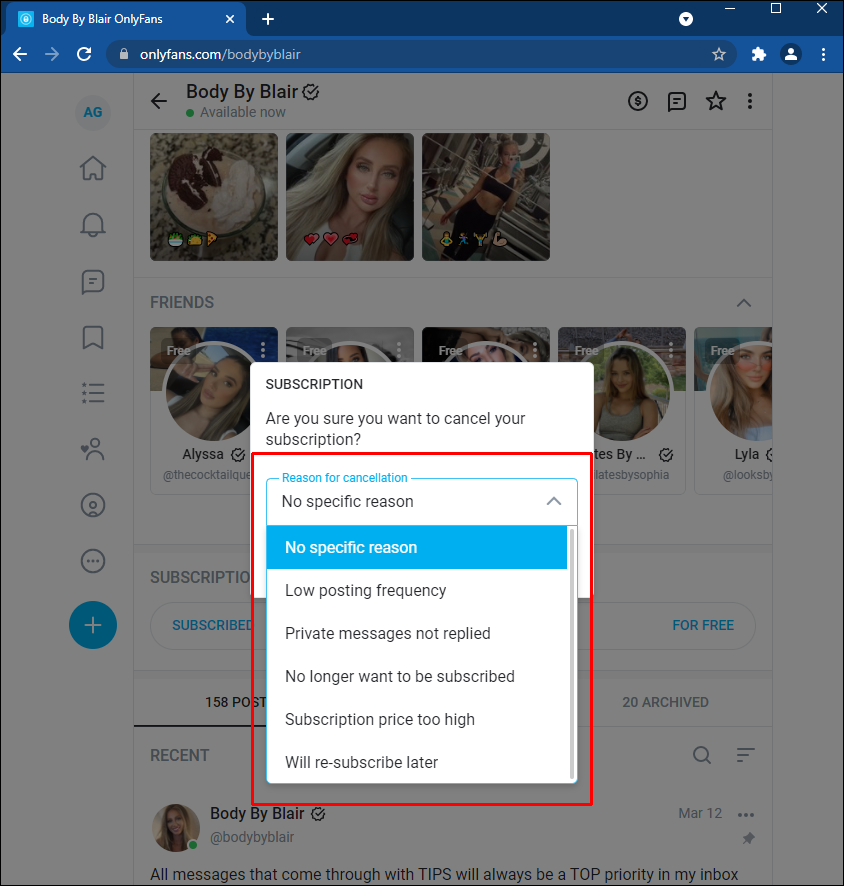
When a creator raises the base price, auto-renew stops for existing subscribers, and access continues only until the paid period already covered ends. That mechanic means a price hike is not an instant charge increase — it is a silent expiry clock.
Four steps will tell you whether your current subscription sits in that risk zone:
- Locate your join date on the card’s timeline and find the rate you signed up at.
- Compare your join date to the most recent price change timestamp.
- Check your own account to confirm whether auto-renew is still switched on.
- Set a calendar reminder a few days before your next expected charge date.
If the last price change predates your join date, you are on the current rate and auto-renew should behave normally. If a change happened after you joined, verify in your account rather than assuming the card is wrong — the account state is authoritative.
Cross-Referencing Multiple Ranking Sources for Accuracy
No single aggregator captures every price event. Comparing a card against a second ranking source, or against the creator’s own page, resolves most conflicts.
- Cached data on one site lagging behind the live rate on the page.
- Regional currency display differences producing non-identical figures.
- Promotional code exemptions that make one source record a discounted entry.
- Creator page edits that no aggregator has picked up yet.
Readers who want a broader comparison across regions and currencies often use a curated reference such as best onlyfans international to check whether a rate is consistent across markets before drawing conclusions from a single card. That cross-check takes two minutes and prevents most false readings.
Treat any single source as a hypothesis and the creator’s live page as the verification step. Ranking data is a starting point for attention, not a final authority on price.
Building a Subscription Shortlist from Trend Analysis
Once you can read timelines, the natural next step is compiling a shortlist rather than subscribing reactively. Group the pages you are considering into archetypes based on their price pattern, then decide what each archetype is worth to you.
| Creator Stability Type | Price Pattern | Subscriber Action |
|---|---|---|
| Steady long-term page | Flat timeline, one rate for a year or more | Subscribe any time; cost is predictable |
| Gradual increaser | Occasional stepwise climbs with notice | Join before a rise or accept the new tier |
| Volatile promoter | Frequent dips and unpredictable base shifts | Time entry to a promo; avoid long commitments |
A shortlist of five to ten pages, each labeled with an archetype and a maximum monthly figure you are willing to pay, converts price history into a spending plan. Free pages belong on the list too — a $0 subscription earns through PPV messages and tips, so the real cost depends on how often you unlock.
Limitations of Historical Data on Free-to-Paid Transitions
Price history has blind spots, and the largest is the free-to-paid switch. A page can run at $0 for a year and then introduce a paid tier without any prior timeline entry, because the card had nothing to record. Subscribers who joined during the free period may find the page’s economics changed overnight.
Bundle introductions are a second gap. PPV unlock ceilings, paid chat rates in the $3 to $5 per message range, and tip activity are not always tracked on ranking cards, so a stable subscription price can coexist with rising in-page costs.
The $0.10 card verification hold is refunded within days and is not a price change, yet it occasionally appears in forum discussions as if it were a charge. Filter that out before reacting.
Practical Weekly Review Habits for Price Tracking
Obsessive monitoring is unnecessary. A five-minute weekly pass keeps you current without turning price tracking into a chore, and it catches changes before a renewal date rather than after.
- Open your bookmarked ranking cards — no more than a dozen.
- Note any price change flags or new timeline entries.
- Verify flagged changes against the creator’s actual page.
- Update your personal spending tracker with any confirmed new rate.
- Adjust upcoming renewal reminders if a rate moved.
Run this on the same day each week so the comparison window stays consistent. If a card has not updated in over a month, deprioritize it and rely on the page itself until the data refreshes. Over time, the habit builds a personal price history that is more accurate for your own subscriptions than any public card.
Methodology note: this guide draws on publicly visible rate ranges and platform mechanics, and it treats BestOnlyFans ranking cards as one input among several rather than a definitive record.
FAQ
How far back does a ranking card’s price history typically go?
Most cards retain entries from the point the page was first indexed, which often means one to three years. Pages created recently will have short timelines, and older pages may show gaps where no changes were recorded because the rate never moved.
Why does my current subscription price differ from the card’s current rate?
You are likely grandfathered at the rate you signed up at, or you joined during a promotional first month. When a creator raises the base price, auto-renew stops and existing access runs to the end of the paid period, so your billed figure can trail the card’s listed rate.
Can a creator change prices without the ranking card updating?
A card can lag behind a live change by days, so treat any flagged change as unconfirmed until you check the creator’s page directly.
What does it mean when a price history shows no changes for a year?
It usually indicates a settled page with a deliberate pricing strategy, and often correlates with steady posting and stable in-page costs. It can also mean the card stopped tracking the page, so verify the last-updated timestamp before trusting a long flatline.
